


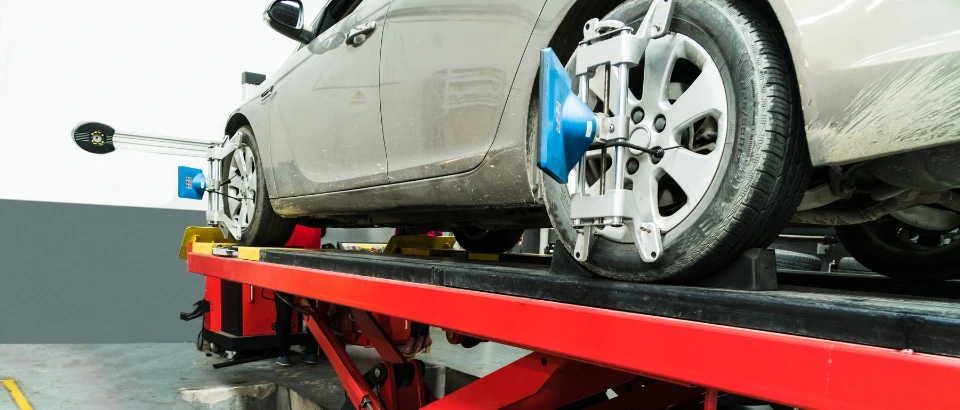
Tyre alignment is very important in the performance, wear, and safety of the vehicle in general. When the wheels are not positioned properly as required by the manufacturer, the tyres are overworked. Prolonged usage results in the imbalance wear, loss of traction, and handling. Poor wheel alignment can, over time, greatly ruin the tyres, reduce their durability, and even pose risks to the drivers. Its effects may be understood to avoid expensive repairs and road accidents.
So, if you are wondering if bad wheel alignment damages your tyres, the answer is ‘yes.’ Find out how!
1. Causes Uneven Tyre Wear
Poor wheel alignment compels the tyres to touch the road surface at wrong angles. This also makes some parts of the tyre tread wear more compared to others, thus lowering the life of the tyre.
- Brings about premature wearing of the inner or outer edge tread.
- Invents feathered tread patterns or scalloped tread patterns.
- Contributes to the insecurity of tyres even with exposed tread.
- Lowers the uniform contact with the road surface.
- Increases the chances of tyre replacements.
Asymmetrical wear decreases the efficiency and grip of the tyres. Even high-quality tyres are not going to retain their value when the undoing of alignment problems is left longer.
2. Reduces Tyre Lifespan Significantly
Wheels that are not aligned only cause drag and friction. Such an unwarranted strain causes rapid wear and tear of the tyres much sooner than they would have otherwise been in normal driving conditions.
- Reduces the projected warranty of tyres.
- Rises in temperature in the structure of the tyres.
- Rubber compounds weaken with time.
- Ventures’ premature hardening of tread rubber.
- Exposes tyres to unexpected breakdowns.
Tyres depreciate more, and this adds expenses to ownership. Periodic checks on the alignment procedure contribute to the maximum life of tyres and their predictable performance.
3. Affects Steering Response and Control
Lack of proper alignment alters the response of the tyres to the steering input. This lowers accuracy, and the vehicle would not be stable or responsive, particularly at high speeds.
Reasons that make the steering wheel draw to the left or right.
- Lowers the stability of highways in a straight line.
- Slow in making reactions in emergent maneuvers.
- Enhances fatigue in the drivers during the long routes.
- Concessions regulate situations of emergency.
Lack of a good steering response imposes extra strain on the tyres. Constant correction on the driver aggravates lapses in wear.
4. Increases Rolling Resistance
Tyres that are not in line do not roll freely. High rolling resisting causes the tyres to scrub the road rather than rolling over.
- Increases surface to road friction.
- Abrades the tread excessively.
- This puts additional pressure on the sidewalls of tyres.
- Residue in the speed of rubber breaking down.
- Lowers the vehicle motion smoothness.
Increased rolling resistance increases the wear on the tyres. The inefficiency also impacts the general vehicle performance and comfort.
5. Leads to Poor Traction and Grip
When properly aligned, the tyres have the greatest contact with the road. Poor alignment minimizes this contact, particularly in braking or turning corners.
- Lessens grip on slippery or wet surfaces.
- Extends the braking distances without notice.
- Loss of traction of tyres on turns.
- Increases the possibilities of skidding or slipping.
- Loss of confidence in adverse road conditions.
Traction loss makes it more dangerous. Tyres are not able to do the desired task when the angle of alignment is not correct.
6. Causes Vibration and Noise Issues
This misalignment results in unpredictable wear patterns of the tyres, causing vibration and undue noise on the road when driving.
- Produces humming or dozing sounds out of tyres.
- Causes vibrations on the steering wheel at some speed.
- Gains cabin noise with age.
- Wears unevenly at a faster rate.
- Lowers the general driving comfort.
Tyre damage is caused by vibration. Losing these symptoms contributes to a higher rate of worsening and pain.
7. Impacts Suspension and Tyre Interaction
Suspension geometry is mostly associated with wheel alignment. The misalignment interferes with the interaction between the suspension parts and the tyres.
- Pressures tyres to take up uncharacteristic suspension strain.
- Alters the distribution of tread loads abnormally.
- Pressure is put on the tyres.
- Rapidly wears off the joints and bushings.
- Lowers the total tyre stability.
Tyres are affected because of the loss of suspension geometry. Alignment correction provides the suspension with balance.
8. Increases Risk of Tyre Blowouts
Poor tyre structure is due to uneven wear and overheating through bad alignment. This enhances the risk of tyre failure.
- Results in excessive heat in the car when driving.
- Dilutes the internal tyre belt with time.
- Makes one more exposed to road risks.
- Increases the risk of damaging the sidewalls.
- Pre-disrupts tyres to unexpected loss of pressure.
The blowouts are risky regardless of the speed. Correct alignment is used to ensure integrity in the structure and operating temperatures.
Read More: How to Avoid Tyre Blowouts?
9. Negatively Affects Fuel Efficiency
Poor alignment causes tyres not to roll over, but to drag. This ineffectiveness also needs more power from the engine to keep the pace.
- Slowly increases the fuel consumption.
- Unnecessary taxes cause an engine.
- Minimizes the mileage consistency in the long run.
- Subtracts operating expenses in the long term.
- Enhances the impacts of deflated tyres.
A low fuel economy indirectly promotes the wear of the tyres. Correction of alignment enhances the performance of the tyres and rolling.
10. Leads to Premature Replacement Costs
Tyres wear out of shape and beyond proper levels. This renders the premature replacement in case of treads that are still in use in other locations.
- Wastes that can be avoided unnecessarily.
- Makes more frequent purchases of tyres.
- Enhances the cost of maintenance.
- Decreases tyre investment returns.
- Impacts the budget planning on vehicle maintenance.
Premature replacement of tyres is an unnecessary expense. Correct alignment gives maximum life of tyre treads.
11. Reduces Overall Driving Safety
Badly-aligned tyres interfere with braking, cornering, and stability. This enhances the risks of accidents in everyday driving.
- Lowers foreseeable managing demeanor.
- Reduces the braking ability in times of emergency.
- Enhances the perils of hydroplaning when wet.
- Weakens vehicle stability at higher speeds.
- Impairs the driver’s confidence on the road.
Tyre condition is a critical issue in safety. Misalignment problems do not manifest themselves.
12. Accelerates Wear on New Tyres
Even new tyres may get damaged within short periods when they are fitted on the wrong wheels. The problems of alignment cancel out the advantages of new tyres.
- Interferes with the evenness of the treads at once.
- Reduces the life of newly-fitted tyres.
- Lowers the performance benefits of high-quality tyres.
- Brings about dissatisfaction even after replacement.
- Early realignment services are required more often.
Recalling new tyres without checking their alignment is expensive. Proper alignment helps to guard investment and also makes the tyres perform optimally.
Conclusion
Yes, tyres may be damaged severely by bad wheel alignment in the long run. It creates uneven wear, decreases traction, increases fuel consumption, and increases safety risks. The failure to notice the problem of alignment causes early replacement of tyres and increased costs in maintenance. Wheel alignment not only helps in tyre protection, but also in enhancing the car’s handling as well as driving safely. This is a basic though crucial measure of addressing alignment at an early stage to extend the life of the tyres, as well as ensuring the overall performance of the vehicle.