


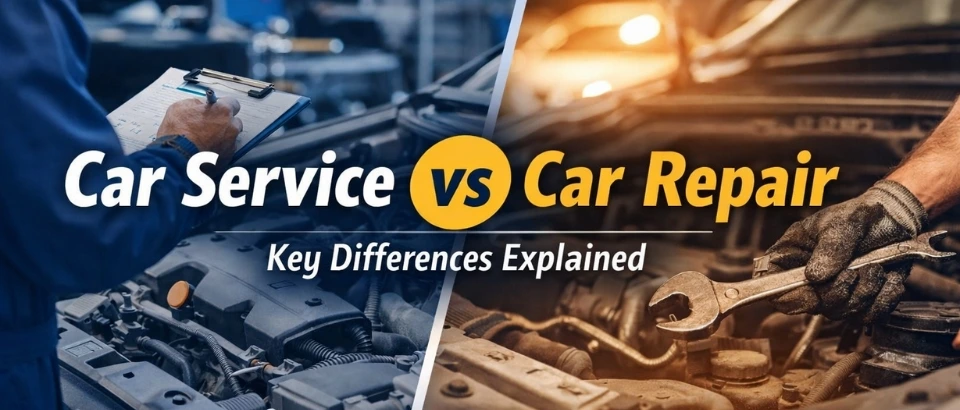
Ownership of cars requires frequent care and precaution. The car service and the car repair are two terms that are often confused. They are similar in use by many vehicle owners, although they have very different uses. The difference allows better planning of the maintenance budgets. It also avoids any unpleasant surprises and unnecessary expenses. Car service is aimed at prevention and regular service. Car repair aims at repairing the pre-existing issues. The two are vital to the lifespan of the vehicle. Being able to know when to use each of them saves time and money. This is also clear, and thus enhances road safety. A well-informed owner is one who makes smarter automotive choices at all times.
What is Car Service?
Car service means a regular, planned maintenance of a car. It involves fluid replacement, fluid and inspection. The objective is to avoid future problems. The services are based on manufacturer intervals. Timely service maintenance makes the car efficient, safe, and reliable during the process. It aids in easy performance and enhanced fuel economy.
What is Car Repair?
Car repair is the process of correcting certain faults or damage. It occurs when parts become ineffective or faulty. Repairs take the form of unplanned and reactive repairs. They respond to warning lights, sounds or malfunctions. The first goal is the normal functioning and safety of vehicles. Repairs can be in terms of the replacement of parts or technical repair.
Key Differences between Car Service and Car Repair
1. Purpose and Intent
Car service has the aim of prevention and optimization of performance. It also tries to keep the vehicles in good condition. Constant service minimizes the chances of breakdowns. It solves wear prior to the onset of failure. Car repair, on the other hand, fixes problems that exist. It reacts when something has gone wrong. The repair functions to restore functionality and not to deter loss. Servicing is proactive in nature. Mending is problematic and responsive. Car service promotes long-term reliability. Car repair guarantees operability immediately. The two cater to various levels of vehicle maintenance. Knowledge of this difference can be used to schedule maintenance. It also minimizes the costs of emergency repairs.
2. Frequency and Timing
The car services are at specific time intervals. These intervals are based on the mileage or hours. The service schedules are obviously prescribed by the manufacturers. The owners will be able to plan services in advance. Car repairs are unforeseen. They rely on the time of component failure. It is not always possible to predict repairs. Services are periodic and routine. Repair is intermittent and ad hoc. Delays in services raise the rate of repairs in the future. Quick servicing will defer big repairs. There is a distinction between servicing and repairing because of predictability. One follows a calendar. The other follows symptoms. Such a difference influences cost planning and convenience. The frequency of servicing will minimize the potential downtime.
3. Cost Structure
The prices of car services tend to be stable. The price is either fixed or packaged. The services can be easily budgeted by the owners. Servicing is cheaper in general. Car repair costs vary widely. They rely on the level of damage. Repair of it might include expensive components. The cost of labor is frequently increased. Sudden maintenance causes a strain on budgets. Repair is the cost that is distributed over a period. Maintenance is a one-time focus of costs. Preventive service minimizes costly repair services. Servicing simplifies the process of financial planning. Repair interferes with monetary anticipations. This is a difference in costs, which has a serious effect on the affordability of long-term ownership.
Read More: How to define a budget for car repairs
4. Scope of Work
Coverage of general vehicle checks is under the car service. It incorporates oil change and inspections. Usually, filters, fluids and a few minor adjustments. It has a wide but shallow scope. Car repair is concentrated on particular defects. It is aimed at damaged or faulty pieces. Repairs are deeper into systems. Engines, transmissions or electronics could require repairs. Servicing is a procedure that takes care of existing elements. Damaged ones are replaced with repairs. Service work is done in checklists. Diagnostics is followed by repair work. The level of work is evidently different. All of them satisfy various vehicle requirements. Both supplement the general car maintenance policies.
5. Planning and Scheduling
Car services can be scheduled easily. Reservation of appointments is possible. Proprietors select convenient dates. Service reminders contribute to further planning. Car services are usually urgent. Failure requires urgent intervention. Repair scheduling is not as flexible. The repairs can interfere with routine. Services are incorporated in scheduled maintenance. Repairs bring disruption to using the vehicles. Predictability is more inclined towards servicing. Repairs are a source of time pressure and stress. Emergency situations are reduced through planned servicing. Enhanced scheduling management enhances ownership. The difference has an impact on the convenience and reliability of daily mobility.
6. Impact on Vehicle Lifespan
Vehicle service is a regular service that will increase the life of the vehicle. It minimizes damage that occurs from wear early. Components are kept in the best conditions. When engines are well-maintained, their longevity is increased. A repair of cars brings about functionality to the vehicles after being damaged. It cannot reverse prior wear. Repeated servicing implies that servicing is not done. Maintenance maintains a resale value. Repairs preserve the rudimentary functionality. Preventive care ensures the long-term value of investment. Disregard of service reduces the life of the vehicle. The number of repairs increases as time goes by. Servicing facilitates long-term performance levels. Lifespan benefits obviously prefer routine maintenance practices at all times.
Conclusion
Car service and car repair have different purposes. Servicing has the result of stopping problems in time. Problems are repaired when they come. Both are required to make the vehicles healthy. The knowledge of the difference makes better decisions. The middle ground guarantees safety, reliability, and values. Intelligent owners focus on service and, at the same time, value repair.