


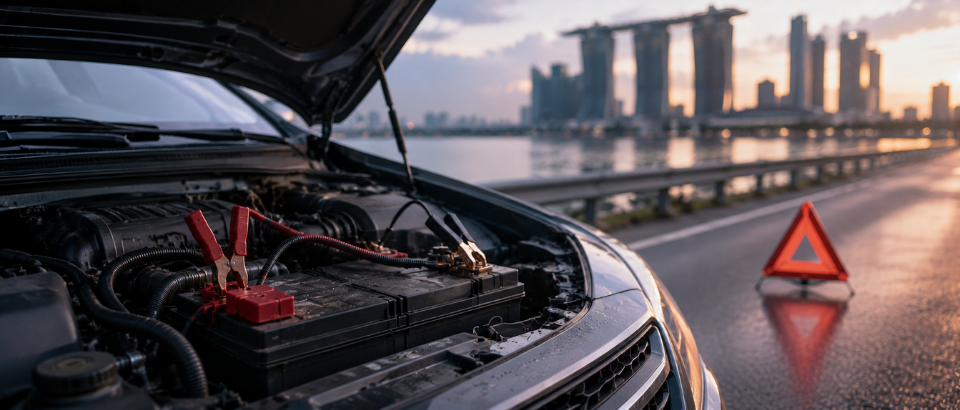
There is nothing quite as frustrating as getting into your car in the morning, turning the key or pressing the start button, and absolutely nothing happening. Maybe you have an early meeting at the office. Maybe you are dropping the kids at school. Maybe you are already running late. Whatever the situation, a car that refuses to start is one of the most stressful things a driver can face.
In Singapore, this problem is made worse by the heat. Our tropical climate puts extra strain on car batteries and electrical components, which means starting issues are more common here than in cooler countries. Add in the heavy traffic and the pressure to get somewhere fast, and you have a recipe for a very bad morning.
The good news is that most starting problems have a clear cause. Once you know what is going on, you can either fix it yourself or call the right person for help. This guide walks you through 8 of the most common reasons your car will not start, what to look out for, and what steps to take.
Signs Your Car Is About to Refuse to Start
Before a car completely refuses to start, it usually gives you a few warning signs. Knowing these early signals can help you act before you are stuck on the roadside.
- Slow engine crank: The engine turns over sluggishly when you start the car. It feels heavy and takes longer than usual to fire up.
- Dim headlights or interior lights: If your lights seem weaker than normal, especially when you crank the engine, the battery may be struggling.
- Clicking sounds: A rapid clicking noise when you turn the key is a classic sign of a weak or dead battery.
- Dashboard warning lights: A battery warning light, check engine light, or other alerts that appear more often than usual should not be ignored.
- Electrical glitches: Power windows moving slowly, the radio cutting out, or the air conditioning acting up are all signs that something is draining your electrical system.
- Engine cranks but does not start: The motor turns over normally but the car never actually fires up. This points more toward fuel or ignition issues than a battery problem.
If you notice any of these signs, do not wait until your car leaves you stranded. Getting a quick check done saves a lot of trouble later.
8 Possible Reasons Your Car Won’t Start
1. Dead or Weak Car Battery
This is by far the most common reason a car will not start. The battery supplies the electrical power needed to crank the engine and run all the electronics in your vehicle. When it is too weak or completely flat, the car simply will not respond.
In Singapore, car batteries tend to have a shorter lifespan than they would in temperate countries. The heat accelerates chemical reactions inside the battery, which speeds up wear and degradation. A battery that would last five years in Europe might only last two to three years in Singapore’s climate.
Common symptoms of a dead or weak battery include:
- Clicking sound when you turn the key but the engine does not crank
- No response at all when you try to start the car
- Lights and electronics are completely dead
- Battery warning light on the dashboard
What causes a battery to go flat?
- Leaving the headlights or interior lights on overnight
- An old battery that has simply reached the end of its life
- A faulty alternator that is not charging the battery while you drive
- Extreme heat causing internal damage to the battery cells
- Long periods of not driving the car
If jump-starting the vehicle gets it running again but it dies shortly after, that tells you the battery is no longer holding a charge and needs to be replaced.
Our team at Swift Tyre Specialist provides car battery replacement in Singapore with quick response times and quality batteries that are well-suited to our local climate. If you are not sure whether your battery is the problem, we can test it for you on the spot.
2. Corroded Battery Terminals
Even if your battery still has life left in it, a poor connection can stop your car from starting. Battery terminals are the metal connectors that link the battery to the rest of the car’s electrical system. Over time, especially in humid Singapore weather, these terminals can develop a layer of white or blue-green corrosion.
Corrosion acts like an insulator. It blocks the flow of electricity between the battery and the engine, which means the engine cannot get the power it needs to start.
How to check for terminal corrosion:
- Open the bonnet and locate your battery
- Look at the two metal posts (positive and negative) where the cables attach
- If you see a powdery, chalky, or crusty build-up around these connections, that is corrosion
- Check that the cables are firmly attached and have not come loose
In mild cases, cleaning the terminals with a mixture of baking soda and water (applied carefully with an old toothbrush) can restore the connection. However, if the corrosion is heavy or the terminals are badly damaged, it is better to get a professional to take a look.
3. Faulty Starter Motor
The starter motor is a small electric motor that gets the engine turning when you first start the car. It only operates for a few seconds, but it is crucial. Without a working starter, the engine cannot begin the combustion cycle needed to run.
Signs that your starter motor may be failing:
- You hear a single loud click when you turn the key, but the engine does not crank
- The engine cranks very slowly even though the battery is fully charged
- Grinding or whining sounds when you try to start the car
- The starter engages sometimes but not every time (intermittent starting problems)
Starter motor issues are more common in older vehicles or cars that have clocked high mileage. Heat also plays a role, as it causes wear on the internal components over time.
Unlike a flat battery, a faulty starter motor cannot be jump-started. It requires either a repair or a full replacement. If you suspect this is the problem, getting a car starter replacement done by a qualified mechanic is the right step. Trying to patch it up with a temporary fix usually leads to more problems down the road.
4. Alternator Problems
People often confuse alternator problems with battery problems because the symptoms can look similar. However, they are two different issues.
The battery starts the car. The alternator keeps it running by generating electricity while the engine is on, and it also recharges the battery as you drive. If the alternator fails, the battery will drain even while you are on the move, because nothing is putting power back in.
Signs of alternator trouble:
- The car starts fine but the battery warning light comes on while you are driving
- Lights flicker or dim while driving, especially at lower speeds
- Electrical accessories start behaving strangely (radio cuts out, air conditioning struggles)
- The car dies while you are driving, even though the battery was recently replaced
- A burning smell or squealing sound coming from the engine bay
If you replace the battery and the car still dies within a day or two, the alternator is very likely the culprit.
A professional car alternator replacement is the correct fix. This is not something most drivers can handle at home, as it requires the right tools and technical knowledge to do safely.
5. Empty Fuel Tank or Fuel Delivery Issues
This one sounds obvious, but you would be surprised how often it happens. Sometimes the fuel gauge in a car gives an inaccurate reading, making you think you have more petrol than you actually do. You go to start the car and nothing happens because there is simply no fuel to burn.
Beyond an empty tank, there are other fuel-related reasons a car will not start:
- Faulty fuel pump: The fuel pump pushes petrol from the tank to the engine. If it fails, no fuel reaches the combustion chamber, and the engine cannot fire up.
- Clogged fuel filter: A blocked fuel filter restricts fuel flow, which can prevent the engine from getting enough petrol to start or run properly.
- Faulty fuel injectors: Dirty or damaged injectors may not spray fuel correctly, leading to starting problems or rough idling.
How to tell if it is a fuel issue:
- You can hear the engine cranking normally, but it never fires up
- There is no smell of petrol even when you crank the engine several times
- The fuel gauge is reading low or the gauge needle seems unreliable
If you suspect an empty tank, getting someone to bring you petrol is the quickest fix. For fuel pump or filter issues, a workshop visit is needed.
6. Ignition System Failure
The ignition system is what converts electrical energy into the spark needed to ignite the air-fuel mixture in your engine. If any part of this system fails, the engine will crank but never start.
Key components of the ignition system:
- Ignition switch: This is what you turn with your key (or what you activate with your start button). If it fails, no signal reaches the starter or fuel system.
- Spark plugs: These create the spark that ignites the fuel. Old, dirty, or damaged spark plugs will not fire reliably, which leads to misfires or a complete failure to start.
- Ignition coils: These transform the battery’s low voltage into the high voltage needed to create a spark. A failed coil means one or more cylinders cannot fire.
Signs of ignition system problems:
- Engine cranks but does not start
- Rough idling when the car does manage to start
- Misfires or hesitation during acceleration
- Poor fuel economy
- Check engine light is on
Spark plugs are a routine maintenance item and should be replaced at the intervals recommended in your car’s manual. Ignition coils last longer but can fail, particularly in older vehicles or cars that have been pushed hard.
7. Key Fob or Immobiliser Problems
Modern cars in Singapore come with electronic immobilisers and keyless entry systems as standard. While these security features are great for preventing theft, they can occasionally cause starting problems if something goes wrong with the system.
Dead key fob battery: If your key fob battery runs out, the car may not recognise the key signal. Some cars will still allow you to start with a physical key, but many newer models require the fob to be present and functional.
Signs your key fob battery is getting low:
- You have to press the button multiple times to unlock the car
- The range for unlocking has reduced significantly
- The car does not respond at all to the fob
Replacing the key fob battery is simple and inexpensive. Most fobs use a CR2032 coin cell battery, which you can find at any petrol station or convenience store.
Immobiliser issues: The immobiliser is a security system that prevents the engine from starting unless it detects the correct electronic signal from your key. If the immobiliser malfunctions or does not recognise your key, it will cut power to the starter motor or fuel system.
Signs of an immobiliser problem:
- The immobiliser light on the dashboard is flashing or stays on
- The engine cranks but immediately cuts out
- The car was recently in for electrical work
In some cases, a simple fix like holding the key fob very close to the start button or using the emergency key can help. If not, a trip to a workshop is necessary.
8. Electrical or Wiring Faults
Cars today have complex electrical systems with dozens of fuses, relays, and kilometres of wiring. Any fault in this system can affect starting, especially if it disrupts power to key components like the starter motor, ignition system, or fuel pump.
Common electrical causes of starting problems:
- Blown fuses: Each circuit in your car is protected by a fuse. If a fuse related to the ignition or starter system blows, that circuit stops working. Checking the fuse box is one of the first things a mechanic will do.
- Loose or corroded wiring: Vibration over time can loosen connections, and humidity can cause corrosion in wiring harnesses.
- Rodent damage: In Singapore’s urban environment, it is not uncommon for rats or mice to chew through wiring, especially if the car is parked outdoors or near food sources.
- Faulty relays: Relays are electromagnetic switches that control high-current circuits in your car. A failed relay can cut power to the starter or fuel system.
Electrical faults can be tricky to diagnose without proper equipment. If you have ruled out the battery, starter, alternator, and fuel system, wiring faults are worth investigating at a reputable car repair workshop.
What To Do Immediately If Your Car Won’t Start
If you find yourself stuck, here is a simple checklist to work through before calling for help:
- Stay calm and check the basics first. Make sure the car is in Park (automatic) or Neutral (manual).
- Check your dashboard lights. Look for the battery warning light, immobiliser light, or any other alerts.
- Listen when you turn the key. A click usually points to a battery issue. Silence could mean a blown fuse or immobiliser problem. Cranking without starting points to fuel or ignition.
- Check the fuel gauge. If it is reading near empty, you may have run out.
- Look under the bonnet. Check for obvious issues like a disconnected battery cable or corrosion on the terminals.
- Try jump-starting. If you have jumper cables and a willing helper, try jumping the car from another vehicle. If it starts, the battery is likely the problem.
- Check your key fob battery. If your car uses a smart key, try replacing the fob battery or using the backup physical key.
- Do not keep cranking. If the car is not starting, repeated cranking can damage the starter motor and drain whatever battery charge remains.
If you cannot get the car started after going through these steps, it is time to call for professional help.
When Should You Call a Mobile Battery Replacement Service?
Not everyone feels comfortable popping the bonnet and testing connections. And in Singapore’s heat, standing on the roadside trying to diagnose a car problem is not exactly pleasant or safe.
A mobile battery replacement service is the right call when:
- Your car will not start and you are stranded. Whether at home, in a carpark, or by the roadside, a mobile technician comes to you.
- You are not confident jump-starting is safe. Incorrect jump-starting can damage electronics or cause injury. A trained technician does it properly.
- You need the battery tested on the spot. Professional battery testing equipment can tell you exactly how much life your battery has left.
- You want the battery replaced immediately. A mobile service brings the replacement battery to you, fits it on the spot, and checks that everything is working before leaving.
For Singapore drivers, mobile battery replacement makes a lot of sense. You do not have to tow the car to a workshop. You do not have to wait hours. A trained technician arrives, diagnoses the problem, and has your car running again, often within the hour.
If you are not sure whether the battery is the issue or something else is going on, getting a proper changing car battery service with diagnostics included is the safest approach.
Preventing Future Starting Problems
Once your car is back up and running, a few simple habits can help you avoid a repeat of the situation.
Battery care:
- Get your battery tested every 12 months, especially if it is more than 2 years old
- If you do not drive often, consider a trickle charger to keep the battery topped up
- Park in the shade when possible to reduce heat exposure to the battery
- Make sure all lights and accessories are switched off before leaving the car
Routine maintenance:
- Follow your car manufacturer’s schedule for spark plug replacement
- Change the fuel filter at the recommended intervals
- Have the alternator checked when you go for servicing
- Ask your mechanic to inspect wiring and connections during each service
Be observant:
- Do not ignore warning lights or slow cranking
- If the car feels different to start, have it checked before it becomes a full breakdown
| Component | Typical Lifespan in Singapore | Signs It Needs Attention |
|---|---|---|
| Car Battery | 2 to 3 years | Slow crank, clicking, dim lights |
| Starter Motor | 80,000 to 150,000 km | Single click, grinding noise |
| Alternator | 150,000 km+ | Battery light on while driving |
| Spark Plugs | 30,000 to 100,000 km | Rough idle, engine misfire |
| Fuel Filter | 40,000 to 80,000 km | Hard starting, reduced power |
Why Quick Response Matters During a Breakdown in Singapore
Singapore’s road network is busy at almost any hour. Being stuck with a car that will not start creates problems not just for you, but for other road users around you.
Here is why acting quickly matters:
- Safety: A stalled car in a carpark is an inconvenience. A stalled car on an expressway or main road is a serious hazard, especially at night or in heavy rain.
- Heat: Standing outside in Singapore’s heat while waiting for help can be physically draining. Having a reliable number to call saves time and reduces stress.
- Time: In Singapore, time is precious. A fast-responding mobile service means you lose less of your day to an unexpected breakdown.
- Damage prevention: Repeatedly trying to start a car with a dead battery or a faulty starter can cause additional damage. Calling a professional early prevents the original problem from becoming a more expensive one.
Having the contact of a trusted roadside assistance provider saved in your phone before you ever need it is one of the smartest things a Singapore driver can do.
Conclusion
A car that will not start can feel like a big problem in the moment, but most of the time it comes down to one of these eight common causes. The key is to stay calm, go through the basics, and call for help when you need it.
A dead or weak battery is responsible for the majority of no-start situations in Singapore. Our heat and humidity accelerate battery wear faster than in other countries, so keeping an eye on your battery’s age and condition is especially important here.
If you find yourself stranded or you are not sure what is wrong, Swift Tyre Specialist’s mobile battery replacement and roadside assistance team is available to help. We come to you, test the battery on the spot, and get you moving again quickly. No need to tow, no long waits, and no guessing.
Save our number before you need it. It is always better to have it and not need it, than to need it and not have it.
FAQ Section
Q1: Why does my car battery keep dying in Singapore?
Singapore’s heat puts extra strain on car batteries. High temperatures speed up the chemical reactions inside the battery, which causes it to wear out faster than in cooler countries. Most batteries in Singapore last around 2 to 3 years. If your battery keeps going flat, it could also mean your alternator is not charging it properly while you drive.
Q2: What is the first thing I should check when my car won’t start?
Start with the battery. Listen for a clicking sound when you turn the key, which usually means the battery is flat or too weak to crank the engine. Check that the battery terminals are clean and firmly connected. If the car starts after a jump, the battery likely needs replacement. If it still does not start, the problem could be the starter motor, fuel system, or ignition.
Q3: How long does a car battery last in Singapore?
On average, a car battery in Singapore lasts between 2 and 3 years, sometimes up to 4 years if the car is well-maintained and parked in the shade. The tropical heat accelerates battery wear, so regular battery testing every 12 months is recommended, especially once the battery is more than 2 years old.
Q4: Can I jumpstart my car myself if the battery is flat?
Yes, you can jumpstart your car using jumper cables and another vehicle with a working battery. Make sure you connect the cables correctly: positive to positive, negative to a metal earth point on the dead car (not the negative terminal). However, modern cars with sensitive electronics are better served by a professional mobile battery service to avoid any risk of damage.
Q5: What does it mean when my car clicks but won’t start?
A rapid clicking sound when you turn the key usually means the battery does not have enough power to crank the engine. A single loud click without any cranking could point to a faulty starter motor. In either case, the car needs professional attention. Do not keep trying to start it, as this can drain the remaining battery charge or damage the starter.
Q6: When should I call a mobile battery replacement service instead of going to a workshop?
Call a mobile battery replacement service when your car is completely dead and cannot be driven to a workshop. This is especially useful if you are at home, in a carpark, or by the roadside. A mobile technician comes to your location, tests the battery, and replaces it on the spot if needed. It saves you the cost and hassle of a tow truck.