


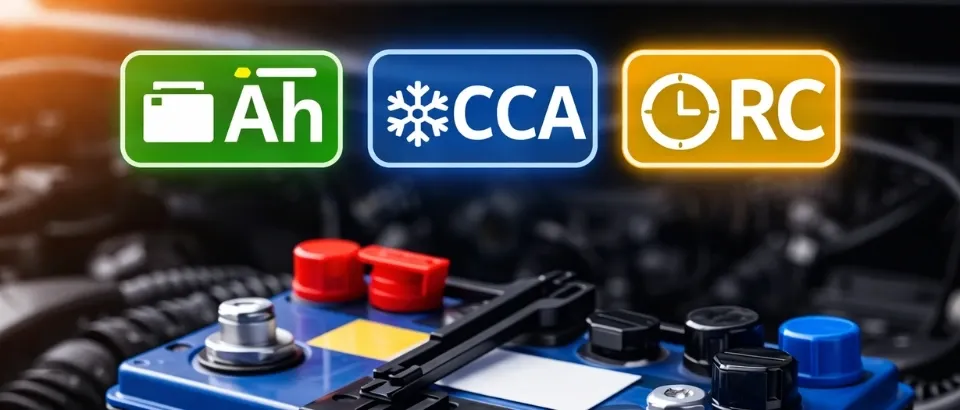
The car batteries are accompanied by numbers. Buyers are confused by such figures. However, they indicate significant performance information. A knowledge of them will guide you to a wiser choice of batteries. It enhances the safety and reliability of the vehicles.
There are three prevailing ratings that are most important. These are CCA, Ah, and RC. The battery demonstrates a variety of strengths in each of them. The combination of them provides an entire picture. This manual describes them in a straightforward manner.
What is CCA (Cold Cranking Amps)?
CCA is the full form of Cold Cranking Amps. It determines the initial power under cold weather. This number is used to indicate the strength of the battery. It narrates its ability to start your engine.
CCA is a low-temperature voltage meter. Specifically, it tests at -18°C. The battery should provide current in half a minute. At this period, the voltage should not go too low. This makes sure that the engine is able to start.
Increased CCA implies increased starting power. This is essential in the colder areas. The engines require additional power when it is cold. Low temperatures cause oil to become thicker. This increases the difficulty in moving engine parts.
Therefore, a high-CCA battery is useful. It guarantees a good start each morning during the winter season in particular.
Why CCA Matters
- In cold weather, it helps turn on the engine.
- Assures good ignition performance.
- Lessens the threat of battery malfunction.
- Important for diesel engines.
The cars in the warmer climates require moderate CCA. Very high CCA is not even necessary. Nonetheless, it is good to have a slightly higher one.
What is Ah (Ampere Hour)?
Ah stands for Ampere-Hour. It determines battery capacity in terms of time. It displays the amount of power that a battery holds. This rating gives the battery life.
This rating is of significance to electrical loads. It provides lights, music systems, and accessories. With increased Ah, the power supply is increased.
Why Ah Matters
- Determines battery runtime.
- Aids electrical parts.
- Assists with long journeys or lazing about.
- Significant to vehicles having numerous electronics.
The car of the modern generation consumes more electrical systems. These are screens, sensors, and cameras. They are better supported by a higher Ah battery.
In case you have frequent use of accessories, a higher Ah should be selected. It guarantees steady and more performance.
What is RC (Reserve Capacity)?
RC is a short form of Reserve Capacity. It quantifies the backup power within minutes. This rating indicates the length of time the battery takes without the engine.
RC test battery constant load. Usually, it uses 25 amps. It determines the duration of usability of the voltage. This comes in handy when there is a failed alternator.
In case the alternator fails, the battery will operate. RC informs you of the number of hours that you are able to drive safely. It creates some time to access help or service.
Why RC Matters
- Being a backup in case of failure.
- Drives without an alternator.
- Helps in the case of an emergency.
- Enhances safety and reliability.
Increased RC corresponds to an increased backup time. It can be used in case of breakdowns. It is able to avoid unexpected vehicle halts.
Key Differences Between CCA, Ah, and RC
All ratings have a different purpose. It is important to have knowledge of their differences.
- CCA vs Ah:
CCA is concerned with the initiation of power. Ah focuses on energy storage. One is about strength. The other is about duration.
CCA is performance in the short run. Ah is long-term capacity. They are both significant for various reasons.
- Ah vs RC:
Ah is the total energy storage. RC is used to measure usable backup time. Both relate to endurance.
RC proves to be more feasible in the case of emergencies. Ah is more general every day.
- CCA vs RC:
CCA helps start the engine. RC assists in the operation of the car once it fails. The two are essential in various circumstances.
How to Choose the Right Battery
The selection of a proper battery is based on what you need. Not all vehicles require equivalent ratings. Look at your driving behaviour and circumstances.
- Recommendations of the Manual:
Always start with the manual. It offers optimum battery specifications. Adhere to those instructions.
- Take Climate Conditions into Account:
Cold regions need higher CCA. Moderate CCA can be used in warm regions. Climate has an influence on battery performance.
- Evaluate Electrical Usage:
When your car has numerous gadgets, select a higher Ah. It guarantees the provision of consistent power. There is a need for more energy in music systems and screens.
- Look for Higher RC:
Higher RC adds a safety margin. It assists in times of unexpected failures. This comes in handy during long journeys.
Common Mistakes to Avoid
A large number of purchasers do not pay attention to battery ratings. This is a cause of low performance. Avoid these common mistakes.
- Choosing Only Based on Price:
The low cost of batteries might not be performing well. Specifications should always be checked. It is more about quality rather than cost.
- Ignoring Climate Needs:
The wrong selection of CCA leads to the problem of starting. Always take temperature conditions into consideration. Fitting the array to the setting.
- Neglecting Electrical Load:
Has a low Ah battery and is very fast-depleting. This has an impact on accessories and performance. Choose based on usage.
- Not Checking RC Rating:
Low RC reduces backup time. This may prove dangerous in failures. Always think of reserve capacity.
Final Thoughts
Battery ratings that are necessary include CCA, Ah, and RC. Each tells a different story. CCA shows starting strength, Ah shows energy capacity, and RC shows backup endurance.
Knowing these figures will help you make a wise choice. It enhances efficiency and dependability while also reducing the chances of unexpected breakdowns.
Always select a battery based on your specific needs. Take into account climate, usage, and the type of vehicle. Choosing the right battery ensures a smoother and more reliable driving experience in all conditions.
At Swift Tyre Specialist, we always recommend selecting a battery that perfectly matches your vehicle requirements and driving habits for long-term performance and safety.
Based on this, battery labels are not complicated. You will now be able to read them with confidence and make smarter choices every time.